Off to see Chinatown
THAILAND
Liz
12/23/20247 min read
Bangkok, Day 30
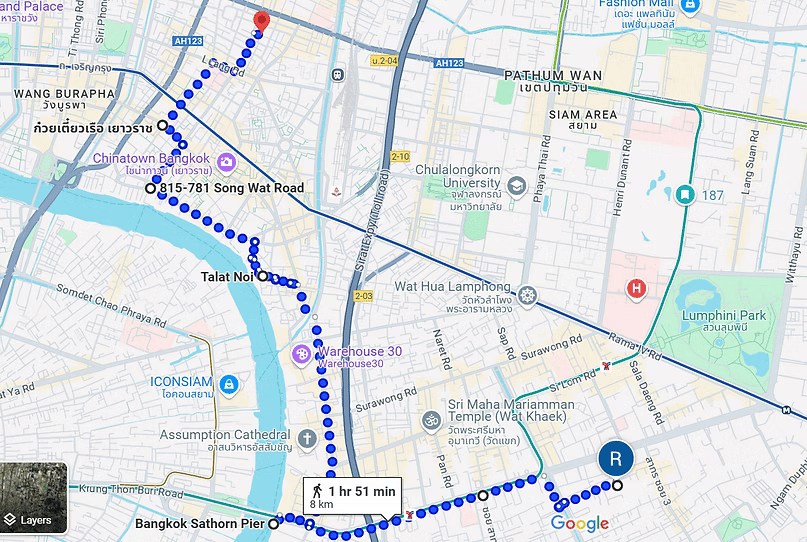
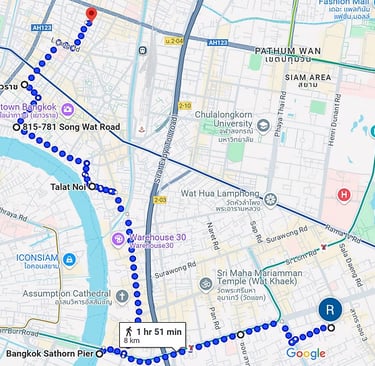
Today's plan was to visit Chinatown during the day (and we will perhaps do a night time visit later also). So after breakfast, we decided to walk to the Ferry as it was only a few BTS stops.
19 Dec 2024
On our way to the ferry we had to walk past the Ghost Tower which I have to confess to having a bit of a intrigue about this massive unfinished skyscraper building and the history around it.
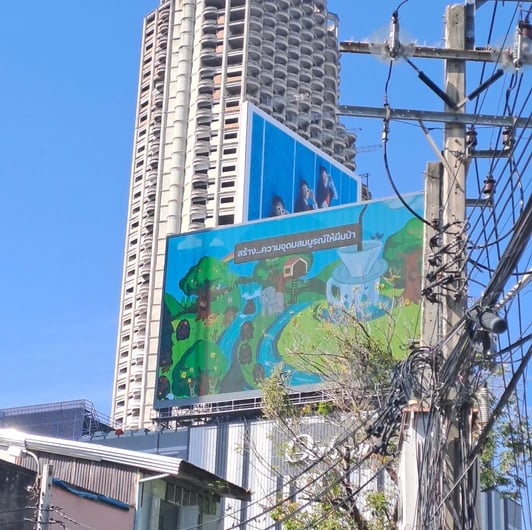
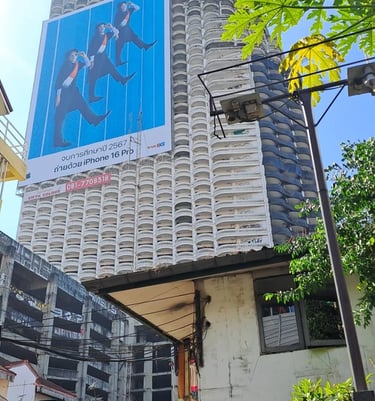
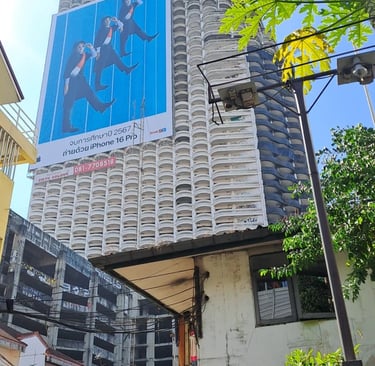
Sathorn Unique Tower is an unfinished skyscraper located in the Sathon district of Bangkok. Planned as a high-rise condominium complex, construction of the building was halted during the 1997 Asian financial crisis, when it was already about 80 per cent complete. It is now among the most prominent of Bangkok's many derelict buildings and has become a destination for urban explorers.
The Sathorn Unique was planned as a 47-storey luxury condominium tower with 600 units. The building was designed and developed by Rangsan Torsuwan, a prominent architect and real estate developer who also designed Sathorn Unique's sister building, the State Tower.
The project was launched in 1990 and was owned by Sathorn Unique Co. Ltd.
In 1993, in a controversial case that would drag on for fifteen years, Rangsan was arrested for allegedly plotting to murder the President of the Supreme Court, Praman Chansue. Rangsan was found guilty in 2008 but was later acquitted by the Court of Appeals in 2010. The case, however, markedly disrupted Rangsan's ability to secure financial support for his projects, and construction of the Sathorn Unique suffered delays due to a lack of funds.
When the Asian financial crisis hit in 1997, Bangkok's real estate market collapsed, and the finance companies that had funded the project went bankrupt and were subsequently liquidated. Construction projects across the city came to a halt, and Bangkok was left with over 300 unfinished high-rise projects.
The building has become known as an urban exploration destination and has also received attention from international visitors. Despite being officially off-limits to the public, access was reportedly gained in the past by bribing security guards on the premises.
In 2017, Pansit Torsuwan (the son of Rangsan) allowed Museum Siam to host a seminar at the building as part of its exhibition commemorating the twentieth anniversary of the financial crisis. He also allowed the building to be used as the location of the horror film The Promise.
There are several superstitions surrounding the building held by people in the nearby communities. Some believe the building is haunted, as the land upon which it sits is probably a former graveyard. Others believe the location of the building, whose shadow is cast upon the neighbouring Wat Yan Nawa, to be inauspicious, resulting in its failed completion.
Chinatown
We boarded the yellow public ferry at the Sathorn pier and took this to the Ratchawong Pier stop (N5). From there we just started to follow the road towards Yaowarat Road.
Bangkok's Chinatown is one of the largest Chinatowns in the world. It was founded in 1782 when the city was established as the capital of the Rattanakosin Kingdom, and served as the home of the mainly Teochew immigrant Chinese population, who soon became the city's dominant ethnic group.
Originally centred around Sampheng, the core of Chinatown now lies along Yaowarat Road, which serves as its main artery and sometimes lends its name to the entire area, which is often referred to as Yaowarat.
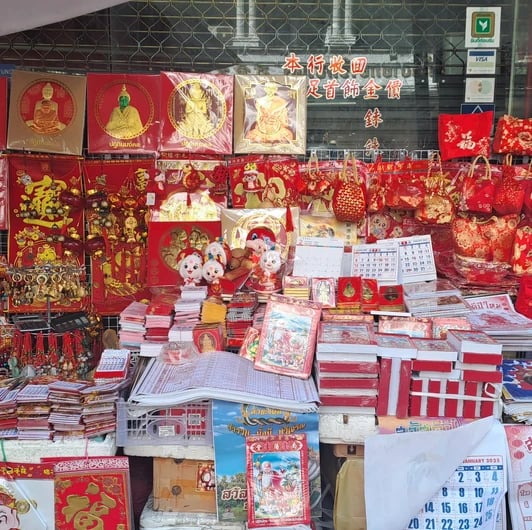
Originally a wilderness area outside the city walls, Chinatown grew to become Bangkok's commercial hub throughout the late 19th to early 20th centuries, but has since declined in prominence as commercial activity moved elsewhere following the city's expansion. It now serves as a hub of Chinese culture, with numerous shops selling traditional goods, and is especially known as a gastronomic destination.
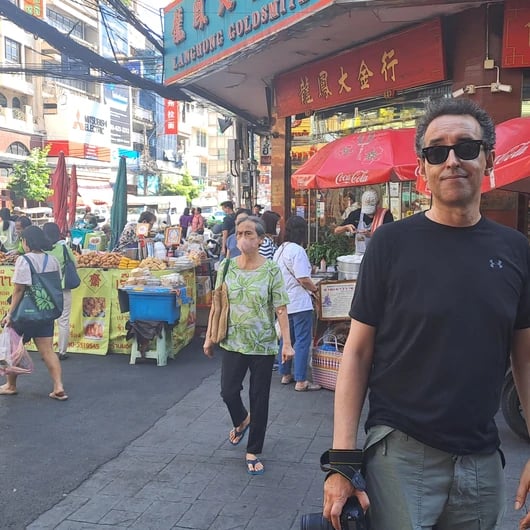
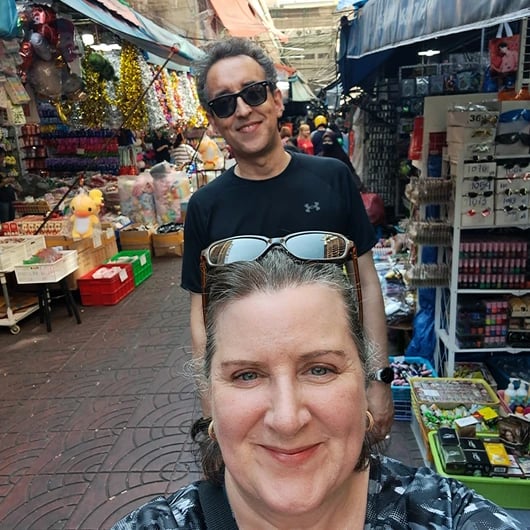
Oh my goodness, what a busy and bustling place this was. I'm not sure if this was partly because it was nearing Christmas and the Chinese New Year, but some of the market stalls were so narrow and busy that I felt a little claustrophobic at times. Not to mention, there were also motorcycles doing all manner of deliveries up and down these narrow alleyways, and I even saw a little old lady frying her food for sale in a large open frying pot in one of these passageways (which filled me with horror from a safety perspective). Think of the stalls inside of the Barras (in the past as I don't know if these still exists today) and this is the sort of alleyways that I am talking about - I couldn't even really take a photo as you were sort of just swept along unless you went into one of the stalls to browse or buy something.
We headed back out into the open street areas and were more content to go around these roads, which were still busy but had a little more space to manoeuvre and see where we were going.
Wat Trai Mit Witthayaram Worawihan
As we walked through the areas, we stumbled across Wat Traimit Witthayaram Worawihan, which is a Theravada Buddhist temple. It was previously known as Wat Sam Chin and received its current name in 1940. Today, the temple is best known for the golden Buddha statue enshrined there. It also houses the Yaowarat Chinatown Heritage Centre.
According to oral histories, the temple was founded by three Chinese friends, hence its name. The temple was probably originally built around the reign of King Rama III (1824–1851), but was mostly rebuilt in the 1930s–1940s. It was renamed to Wat Traimit Witthayaram (traimit meaning 'three friends') on 3 February 1940, and became a royal temple of the second class in 1956.
A plaster Buddha statue had been moved to the temple from the abandoned Wat Phraya Krai in 1935. In 1955, during a ceremony to move the statue to the newly built vihara building, it was accidentally dropped, cracking the plaster and revealing a gold statue hidden beneath.
We had a look around the area, which was lovely. However, it was quite hot and we'd been doing a lot of walking in the heat, so we decided not to go into the temple but to head for something to eat instead.
Lunch
I'm not quite sure of the name or location of where we ended up going for lunch, as it was some side street. We did pass an area that seemed to be full of motor car parts and components and the smell of diesel and oil reminded me very much of my dad, as he would have loved this section - I mean the pavements and roads were black with the oil and the people there were very much your old car mechanic types with axles and parts of cars all around them.
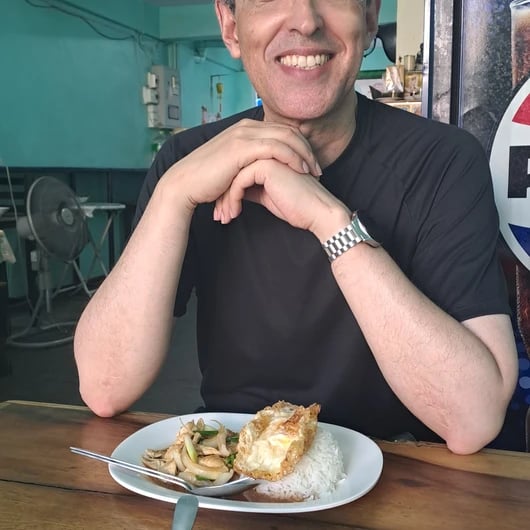
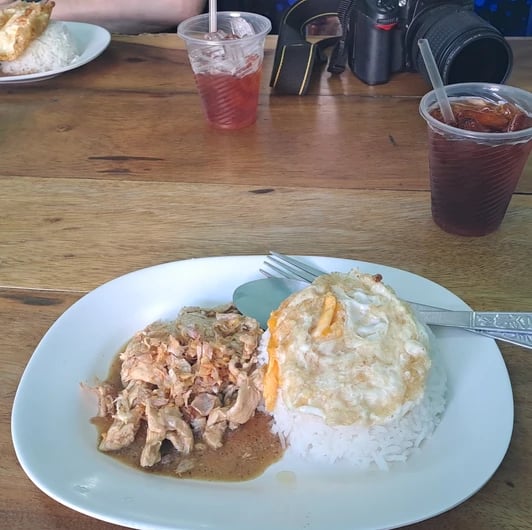
However, for lunch we both had a rice and meat dish - I had garlic and pepper chicken and R had some sort of pork and onion dish - both came with a fried egg on top. It was exactly what we needed, and we very much enjoyed the rest. The total bill with drinks was £3.22!
Talat Noi
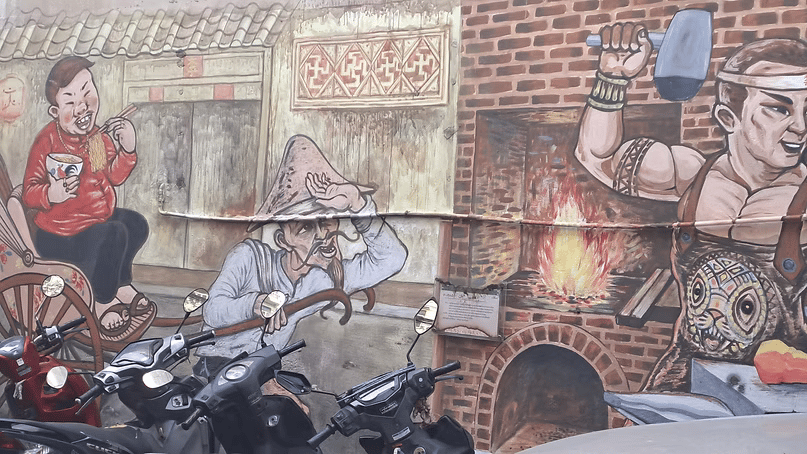
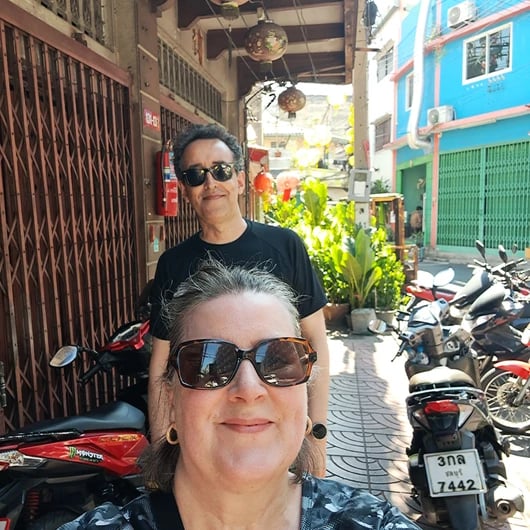
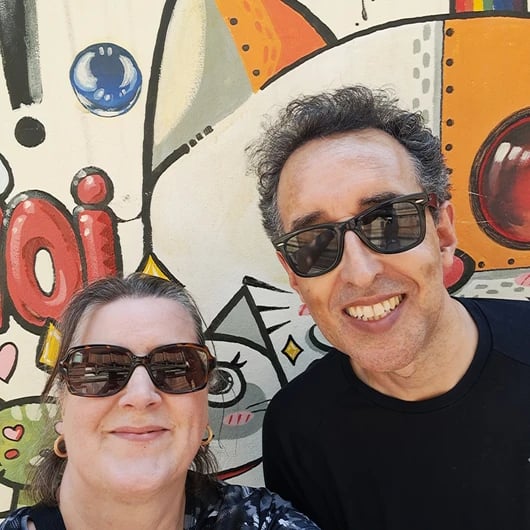
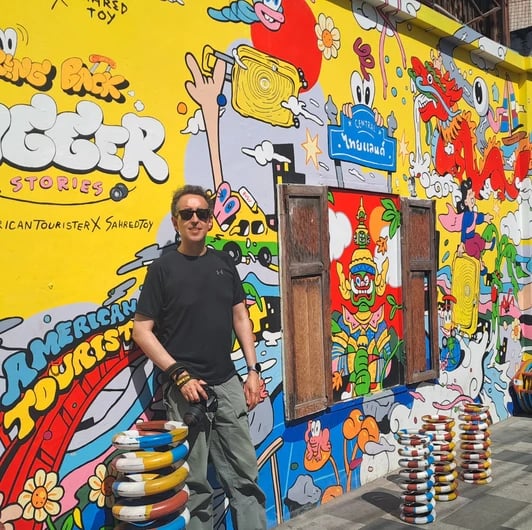
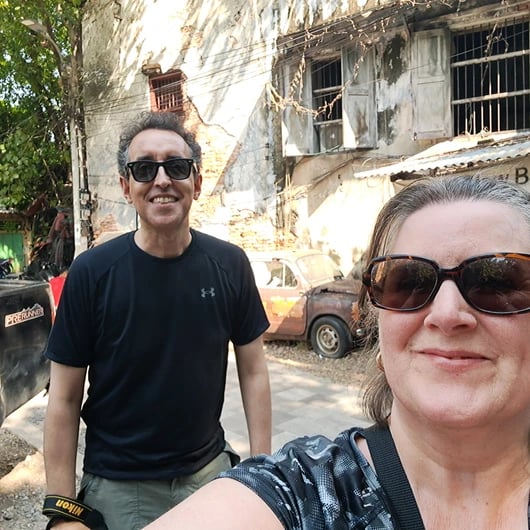
After lunch we headed off to see the Talat Noi area. We really loved this area, it was so colourful and bright - and just had a great vibe to it.
Talat Noi is a historic neighbourhood in Bangkok. It's located on the periphery of Bangkok's Chinatown, and has been home to various ethnic Chinese communities since soon after the foundation of Bangkok. The name Talat Noi means 'little market'.
Talat Noi has a long history predating the founding of Bangkok. The first ethnic group to settle here were the Portuguese from Ayutthaya. They built a Portuguese church in 1786, today known as the Holy Rosary Church or, in Thai, Wat Kalawa. Later, other ethnic groups came to live in Talat Noi, not only Chinese but also Vietnamese and Khmer. The area was Bangkok's first port, and was where immigrants landed.
Today, Talat Noi is a cultural attraction. Locals retain their form of speech, food, and folk beliefs as in the past. Houses and lanes are lathered with graffiti that makes the place popular with teenagers, hipsters, and foreign tourists who want to experience a traditional Chinese quarter. It is convenient to other attractions in the adjacent historic Bang Rak neighbourhood on Charoen Krung Road: Captain Bush Lane and House No.1, the Old Customs House, Bangkok General Post Office, and Assumption Cathedral.
After visiting the area, we walked back to the apartment by more or less the same route we'd come by, except we didn't use the ferry this time but just followed the route back. We passed the Grand Postal Building (opened in 1940), which I think is a brutalist design style of building. We also had another look at the spooky Ghost Tower again....and that was pretty much our exercise for the day, so home to shower, rest and recuperate... oh and to feed and play with Master Neko (the cat)!
Bangkok, Thailand
Copyright © 2024 by Two Go Travelling. All rights reserved.
Copyright © 2025 by QuietKaizen. All rights reserved.